What are three discussion topics that are taboo at dinner parties or in casual conversation? Race, religion, and money. For us, our time in Greenwich, CT, elevated all three in ways that they could not be ignored, suppressed, or avoided. Last week Dianne stepped gingerly into race, this week we jump head-first into religion, and next week we’ll put money on the table. These are critical aspects of the American story, as well as our story over the past 50 years. And you can’t really know either story fully without including them. So here goes, but know this: we start traveling again at the end of August!
Faith and Christianity (I can’t begin to speak with any real knowledge of other religions in America) have been a part of my life for as long as I can remember. My parents used to drop us kids off at church and pick us up afterwards, and for all three of us, that provided a foundation that survived. My faith life has been all over the map: speaking in church on Youth Sunday; attending a Methodist church with my girlfriend in high school; briefly joining the Jesus Movement in the ‘70’s; participating in a fundamentalist church during much of college; being a deacon and elder in a rather traditional Presbyterian church in Richmond, VA; working as Associate Director at a Christian camp based on Martha’s Vineyard; serving as Executive Pastor at Trinity Church in Greenwich, CT; preaching to 5,000+ people in Rwanda; and now not regularly attending church. I share all that to illustrate the point that faith evolves, beliefs change, and participation can ebb and flow. That is true for me, and it’s true for America.
A number of the original thirteen English colonies were started primarily for religious reasons, as some of the early settlers sought freedom from persecution, opportunity to worship as their particular group desired, or simply the chance to pursue their faith free from governmental mandates and requirements. The same was also true to some degree for Spanish and French settlements; religion was a key motivation, though certainly not the only one. With such a start to our country, it’s not surprising that religion has been influential throughout our history. But rather than providing a history of religion in America (though that might be extremely interesting!), I want to focus on just one aspect: the relationship between faith and politics. As a government major in college, this topic has always interested me, and it is certainly one very much in the headlines these days.
For most of my years, and from my limited religious experience, I have believed that people of faith would naturally try to live a good, moral life; they would care about the poor, the stranger, honesty, humility, forgiveness, and reconciliation. No one would ever be perfect, and behavior was a consequence of belief, not a prerequisite. Love, care and acceptance were most important. Political views might differ, but those three values seemed non-negotiable. But gradually, over the past decades, I’ve witnessed many churches, and members, become increasingly defined less by what they believe about doctrine than by what they believe about elections, politicians, and specific issues. I’m not sure when it started (perhaps with Roe v. Wade and the issue of abortion in 1973, or with the Moral Majority in the late 1970s), but it seems that the trend has gotten stronger and stronger and now feels almost the key defining characteristic for many churches.
For many church-goers, there is the belief that America possesses a unique divine identity and that the nation’s laws and institutions should explicitly reflect a particular understanding of Christianity–almost a theocracy. For many others, however, there is the equally strong belief that there is not, and should not be, a national religion; freedom of religion is constitutionally guaranteed and should always be respected. These differing beliefs clash in so many ways today: posting the Ten Commandments in public schools, public support for parochial schools, recognition of same-sex marriage, government funding for religion-based nonprofits, just to name a few high profile debates. These issues, and the world view behind them, are now separating families, destroying friendships, causing schisms in churches, and fracturing our country.
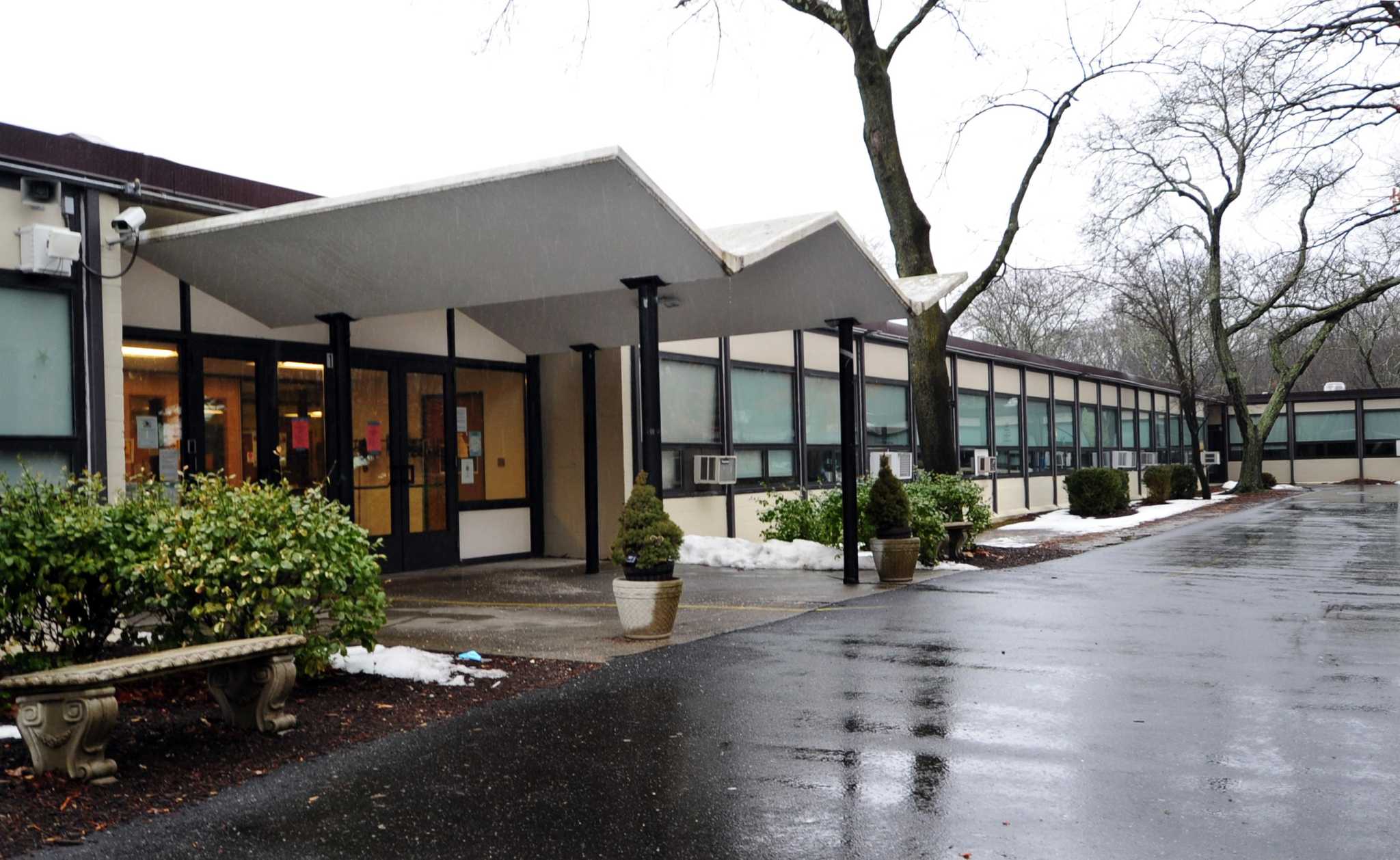
When I accepted the position as Executive Pastor at Trinity Church in 2000, I was searching for a different approach and understanding from this divisive, dichotomous perspective. The church had just started and was the late Sunday afternoon service of a wonderful, traditional church in backcountry Greenwich. We at first met at Christ Church, a long-time congregation who didn’t mind us using their sanctuary. But Trinity had dreams and a vision to be a very non-traditional church, one that non-church-goers would be comfortable attending and exploring issues of faith. Within a year or so, we had worked out a deal with a local middle school to use their auditorium on Sundays and we were making plans to start a Sunday morning service in addition to our afternoon gathering. Trinity grew from 150 people initially coming in the afternoon to about 800-900 attending the two services. We were in the auditorium, with seats sized for middle-schoolers, with a one-microphone sound system, and with images of giant superheroes or Halloween figures surrounding us at times rather than stained-glass windows. This might not have been the preferred physical inspiration of a gothic cathedral, but it was our gritty, real-world spiritual adventure.
Trinity offered an alternative perspective to Greenwich, to organized religion, and to society at large. It was casual, creative, and community-focused. People came in shorts and no one wore a tie. Words to songs were projected onto a screen, as there were no hymnals. Movie clips were often used to illustrate spiritual principles. These traits are more common-place today, but in 2000, they were ground-breaking. There was no formal doctrine, but rather an emphasis on relationship with God and each other, on belonging and caring. Trinity was more concerned about the heart than behavior. It asked you to think, not just follow rules. There was excellence in music, in speaking, in activities. There was a commitment to social justice, both locally and globally. There was no membership, yet people came regularly; there was no pressure to give, yet people gave generously; there was no political position, and people were encouraged to seek a third way rather than simply choose between political and social opposites. For Dianne and me, and for many in Greenwich and the surrounding towns, Trinity stood out, the best of what church could be, the synthesis of heart and mind, care for your neighbor and care for the world.
But outside of churches like Trinity, some parts of evangelical Christianity started to look very different. Some preachers, though not all, began to lead their congregations down a political path, strongly directing them to vote for certain candidates or support specific causes, ridiculing opposing candidates and belittling those who didn’t believe as they did. Acceptance of others was replaced with avoidance of “unbelievers.” Belonging was replaced by exclusion, discussion by dogma, and caring for others by protecting our own. It was us against them, sides were drawn, and the battle became more important than the community.
Debates, or at least the shouting out of strong opinions, over religion’s role in politics became more visible and more vocal. Should government seek to implement religious principles as the basis of our society, or should it go to great lengths to protect our freedom of worship? As a Christian, I have always enjoyed freedom of worship in America, but I wonder whether Jews, Muslims, Buddhists, and other groups in our country could make that same statement, and whether those who choose not to believe or worship at all feel pressure to do so or conform in some way.
I struggle these days to understand the broader Christian church. At Trinity, I felt that it was all coming together, a movement for the church that could catch fire and lead to true change, for individuals and for society. But, unfortunately and quite disappointingly, it burned out after just a few years and lost its edge. Yet I still look back to that experience, that tertium quid approach, as the best option. In our dualistic world where people so often pigeon-hole others based on political party, ideology, race, gender, and/or sexual orientation, such classification seems both overly simplistic and quite dismissive. Only a third way offers real hope. I still believe the Christian message, and most religions, call us toward humility rather than certainty, compassion rather than power, and service rather than dominance. I would love for all churches to be less interested in winning political battles and more interested in being good neighbors. A third way is possible, but only if we all are willing to sacrifice our desire to be right and instead strive hand-in-hand for peace, justice, and equality. America has faced similar challenges in our history, and there’s no doubt that the present looks rather bleak, but the next chapter, for America and for us, is still in the editing stage.
Leave a Reply