Model society, planned city, social reform, religious retreat–no matter the name, a number of the original thirteen colonies, as well as many, many other groups and endeavors since, sought to plan and create a better life for themselves than the one they were experiencing. Freedom from persecution, debt, famine, and oppression led many to flee to the New World, while the opportunity for property ownership, riches, and self-determination beckoned to many more. This quest to plan an ideal setting and situation has been a theme in my life for decades (the “Planner Pierce” moniker has followed me everywhere), and our recent visits to Seaside, FL, and Savannah, GA, rekindled my interest and my excitement.
Of course, the planning of settlements, forts, outposts, and even entire towns and cities was happening long before the New World was settled. In Western Europe, the Spanish, French, and Dutch, and eventually the English as well, were all creating designs for locating roads and buildings to accomplish specific needs. What seems to be missing from most of these plans, however, was concern for the humans involved. It was each country’s goals being pursued–the individuals were just the necessary implements for doing so. These plans certainly influenced designs in the New World, and many of them were modified to focus on defense, trading, and colonization. But with the New World came an opportunity for a new life (though not for all), and some plans started to emphasize people and not just profits.
At William and Mary, my honors thesis focused on efforts, both historical and current, in the United States to create environments more conducive to quality of life and to better community. Starting with the “city on a hill” advocated by John Winthrop and sought by the Puritans as they sailed to found the Massachusetts Bay Colony, I also researched, among others, the German pietists’ Ephrata community, the Shaker community in upstate New York, Robert Owen’s New Harmony cooperative society, John Humphrey Noyes Oneida Community with its communal child-rearing and shared property, several Amana and Moravian colonies, and Arden, DE, founded on Henry George’s single-tax philosophy and collective ownership. After reviewing historical efforts and their successes and failures, I traveled to nearby Reston, VA, and Columbia, MD, both prime examples of the “New Town” movement in the 1960’s and 70’s to design entire communities from scratch rather than letting suburbs grow randomly. They were heavily influenced by the “Garden City” planning tradition and included access to nature, pedestrian pathways to encourage walking and biking, and village centers to promote a sense of belonging. The hope of the towns was that better designed environments would result in better social outcomes and happier people; the hope of the developers was that people would pay for these enhancements.
All of these efforts, both past and present, aimed to create a community for their residents that was better than the alternatives, one that offered a spiritual or philosophical basis superior to that of society at large, as well as a day-to-day lifestyle that was more human than the industrial chaos being experienced in many cities. I learned a lot through this academic exercise, perhaps most importantly that it continues to be an American trait to believe in utopia, that there are, or can be, places where the grass is greener, places better than what we have, if we can only get to them.
This belief drove me as I entered my professional career. Inspired by Reston, Columbia, and other creative city planning efforts, I went to grad school in Urban Planning and spent my first years trying to grow greener grass, to improve my immediate communities, by developing waterfront properties for public access and enjoyment, creating recreational opportunities where few existed, building hydroelectric facilities to keep energy costs low for citizens, and controlling sprawl through land conservation. But government moves slowly, and I soon believed that I could accomplish more through other channels: a technology company, which I tried to run more like a community than a business (not a good idea), a church (but a spiritual community is made up of imperfect people), and nonprofit organizations addressing social problems and injustice. But it’s hard to create utopia, or even to improve community in a lasting, meaningful manner. No wonder most of the attempts I had studied did not last.
“But if the heritage of bricks and mortar is meager, the utopians at least left a rich legacy of hopes and dreams. One should not be too harsh in judging what, with the advantage of a lengthened perspective, now appear as ludicrous or wildly impractical schemes to reconstruct society. The modern city planner, who himself must be something of a utopian if he is to maintain his idealism and sanity in an increasingly ugly and chaotic world, may appear equally absurd a century hence.”
–John Reps, former Professor of Regional Planning at Cornell University, Town Planning in Frontier America, 1965.
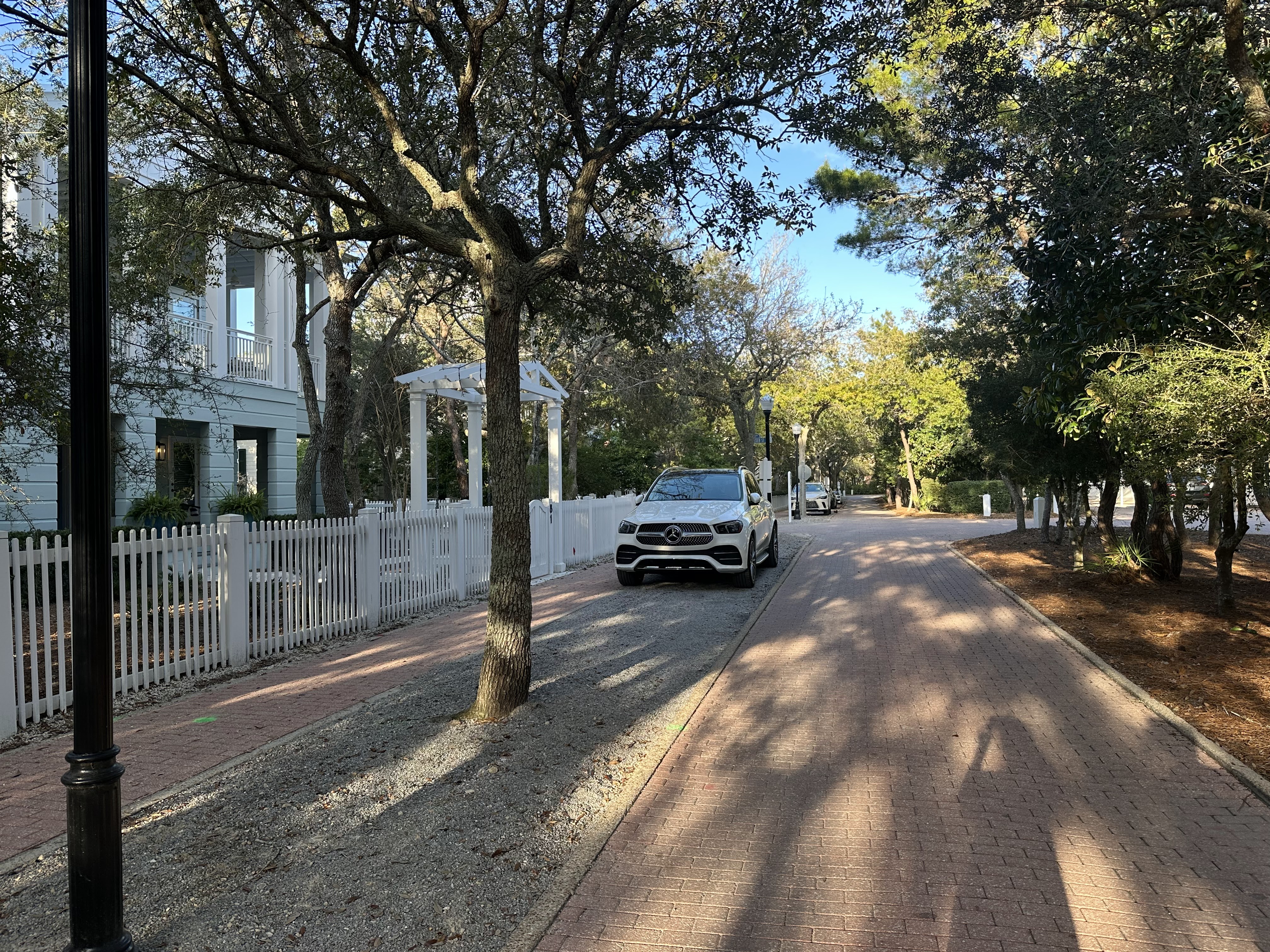
A stop at Seaside, FL, rekindled the enthusiasm and idealism of this city planner. Drawing on the successes of the New Town movement but also incorporating principles of New Urbanism, Seaside started in 1981 as the dream of a developer and several architects/planners/urban designers, working on 80 acres to create a community that was not built around the automobile. With a design that featured walkable neighborhoods, mixed-use buildings, traditional yet creative architecture, strong public spaces, and a compact village center, Seaside developed slowly, as it was nearly an hour from the nearest conveniences, grocery store and restaurants. But as word spread, as a few houses were constructed, and as disgust with suburban sprawl grew, Seaside became a mecca for those seeking to build a better, human-scaled, sustainable community. A section of its public space was even inspired by Thomas Jefferson’s UVA Lawn. A walk through the neighborhood streets and around the village center lifts the spirit and gives hope that life can be better than just what we usually settle for. Environment can make a difference. Beauty and design matter.
Today, though, there are questions as to whether the design has produced the results it sought. Real estate prices have soared, and Seaside has become a place for the wealthy to hang out. Year-round residents have declined, replaced by jet-setters who come for 2 weeks and leave again. Yes, the town is beautiful and the architecture inspiring, but the beaches are private for most of each day and there is a sense of elitism and entitlement. Are great design and natural beauty only available to those who can pay the price? Seaside became widely known when it served as the setting for the film The Truman Show, an artistic questioning of control vs real community. Unfortunately, those very questions now apply to Seaside.
Soon after reluctantly leaving Seaside, we arrived at Savannah, GA, and another attempt to construct a model society. James Oglethorpe and the Trustees for the Establishment of the Colony of Georgia in America were granted land in the New World to create a buffer colony between Spanish Florida and South Carolina, helping to defend Britain’s southern frontier. But Oglethorpe also had other goals in mind. Influenced by prison reform debates in Britain, he wanted to provide an opportunity for a fresh start for the “worthy poor” who had fallen into debt; the colony would allow them to own property and rebuild their lives. Oglethorpe also believed in the virtue of independent small farmers who worked their own land, making them valuable and committed citizens. He believed in moral and social reform and in an egalitarian society; as a result, slavery was prohibited, rum and hard liquor were greatly restricted, and military discipline was encouraged. All were to be equals, working their own land, building up their individual lives as well as their virtuous, orderly, cooperative community.
Oglethorpe devised a plan for the development of Savannah that translated his concepts and goals into physical form. A series of wards with relatively small neighborhoods was laid out with ease of future growth in mind; lot sizes were identical, discouraging grandiosity; and public squares were incorporated every few blocks. Space for civic buildings as well as militia drills was provided close to homes. The layout promoted community cohesion, defense, and equality.
Within twenty years, however, many of the original rules collapsed, as it seemed that most people had other ideas of utopia. When Georgia ceased to be a “company colony” and became a royal one in 1751, large plantations were allowed, slavery was legalized, and rum restrictions were lifted. The physical plan for Savannah survived, however, and the city continued to grow according to Oglethorpe’s master plan for another century. Today, the abundant public squares are beautiful parks providing green space and easy access to nature in the very heart of the city. We stayed at a lovely B&B right on Forsyth Park, the largest of the later public spaces, with a beautiful view of the park–it was so easy to enjoy and appreciate this aspect of the vision of James Oglethorpe nearly three centuries ago.
But Savannah has its challenges as well. Public squares are no longer routinely incorporated into new areas of development. Rising real estate prices have pushed the lower income residents to developments outside the core city. The Savannah College of Art and Design (SCAD) brings great creativity to the community, but it has grown from a few hundred students to over 18,000, with 9,000 of them in Savannah, utilizing 70 buildings for academic use–is Savannah becoming an institutional town? Tourists flock to Savannah now, and accommodations and services are pricing out many potential visitors. As in Seaside, is great design only for the wealthy?
Intentional communities seeking to institute a different style of community may not be unique to the United States, but the constant effort to build better is certainly an American characteristic, one that has inspired individuals and groups to leave the known in search of and hope for something more. Religious sects, social and moral reformers, counter-culturalists, and even entrepreneurs have made dramatic, and sometimes very costly, attempts to create community. Some were more successful than others, some attempts still thrive today, but most were driven by the human desire to connect within the confines of a supportive, sustainable community. We continue to long for and seek that community connection today, but increasingly it seems that community has a price that only a handful can really afford. The quest for better has to continue.
Leave a Reply